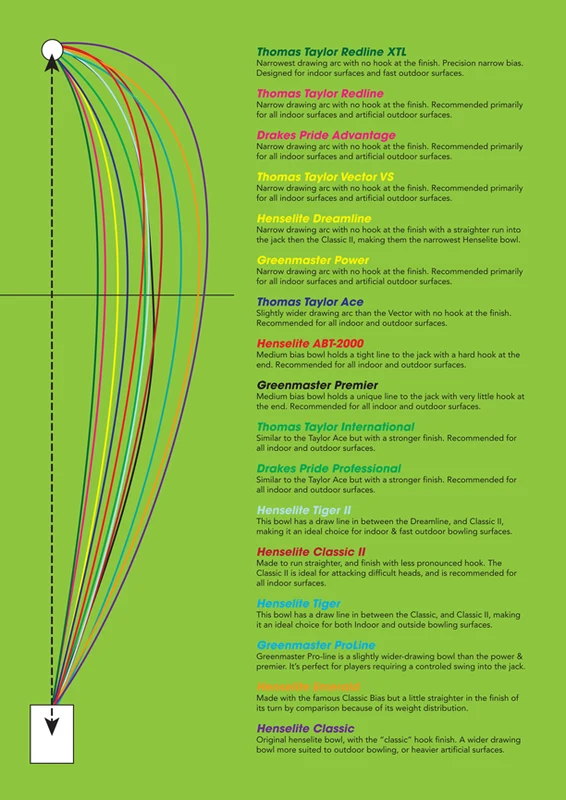
Bowl bias comparison chart
Lawn Bowling Terms, Rink Diagram & Hand Signals
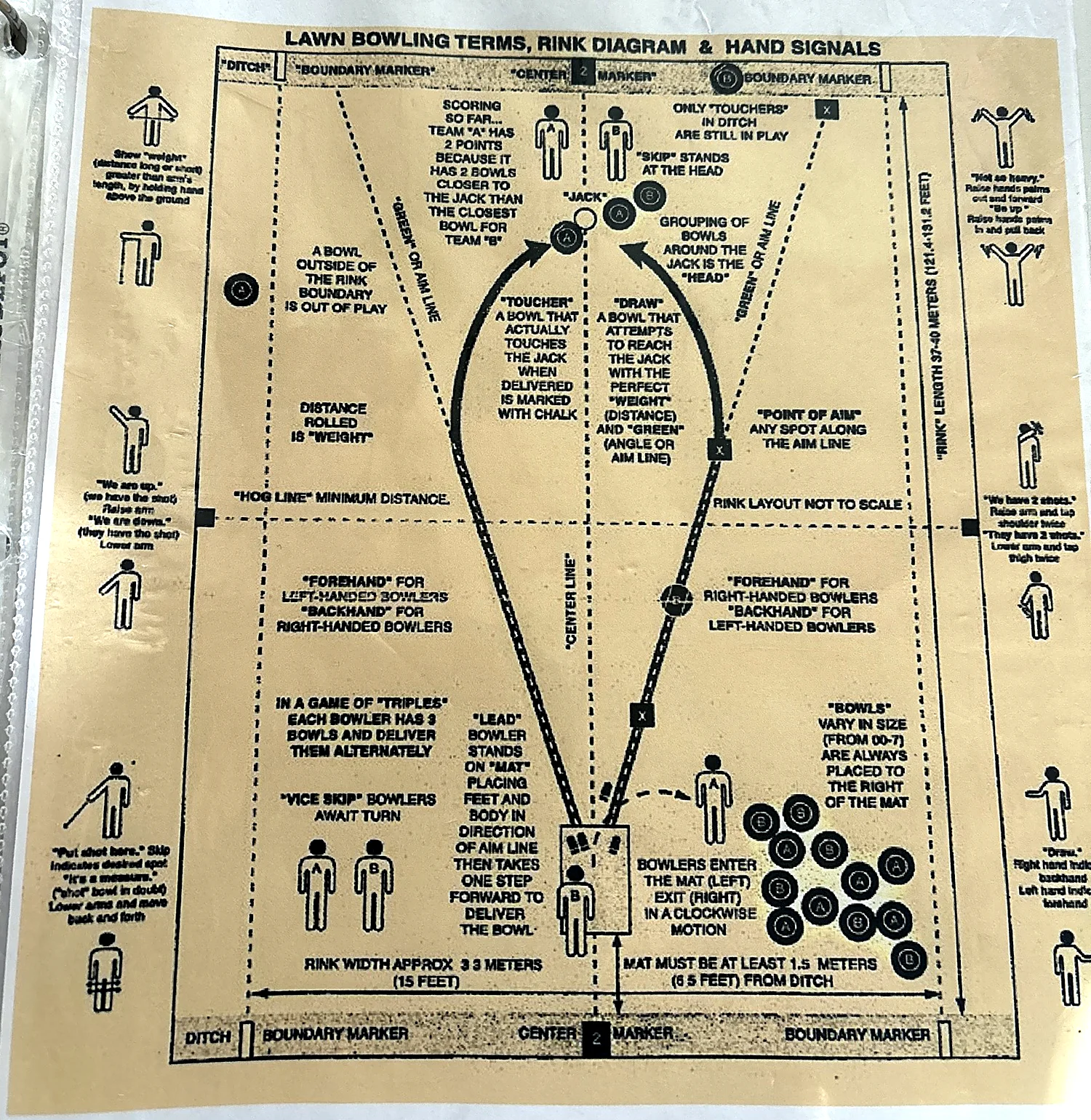
Photo: Tony Newton · original source unknown
Lawn Bowling Rink Layout
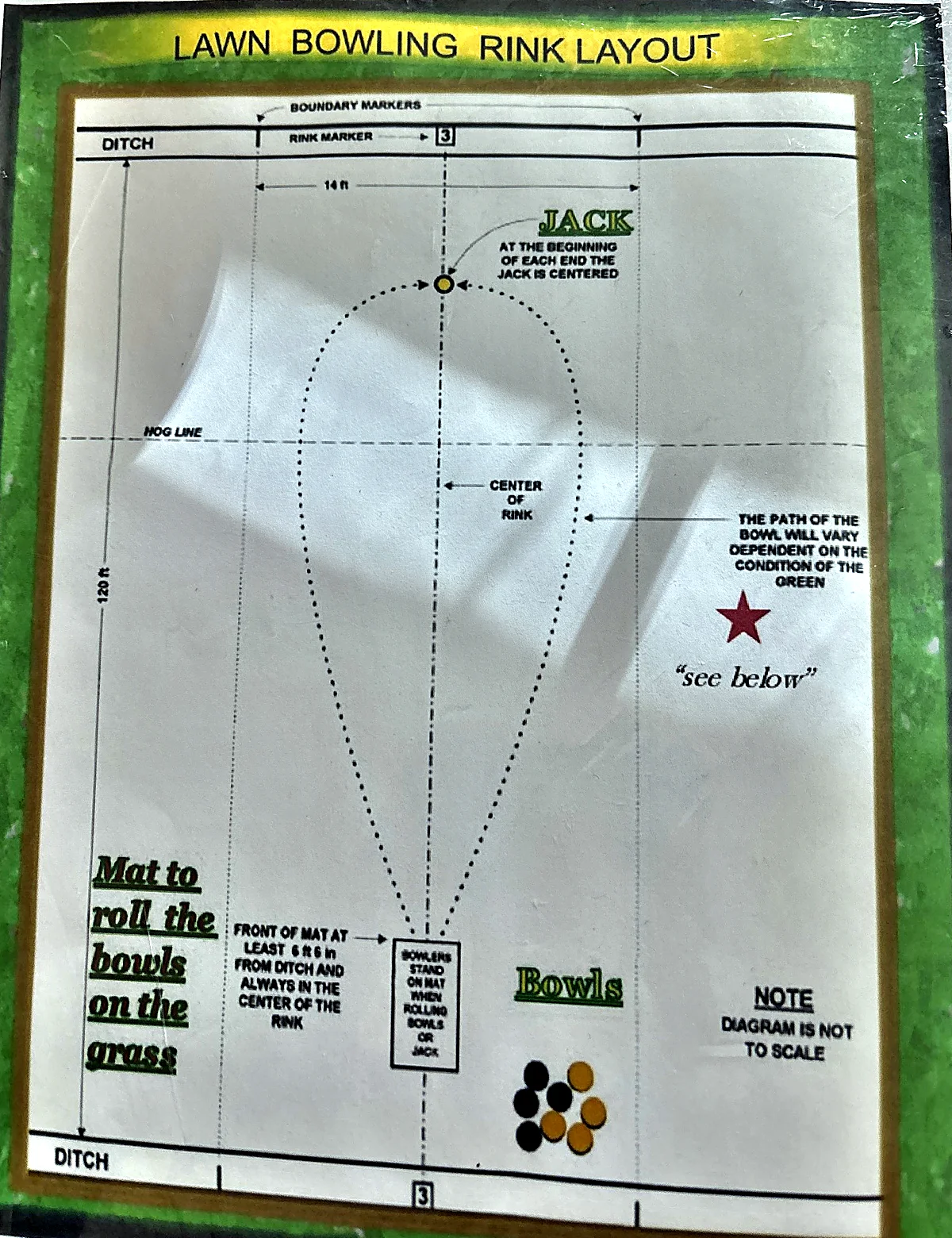
Photo: Tony Newton · original source unknown
Basic Bowls Etiquette
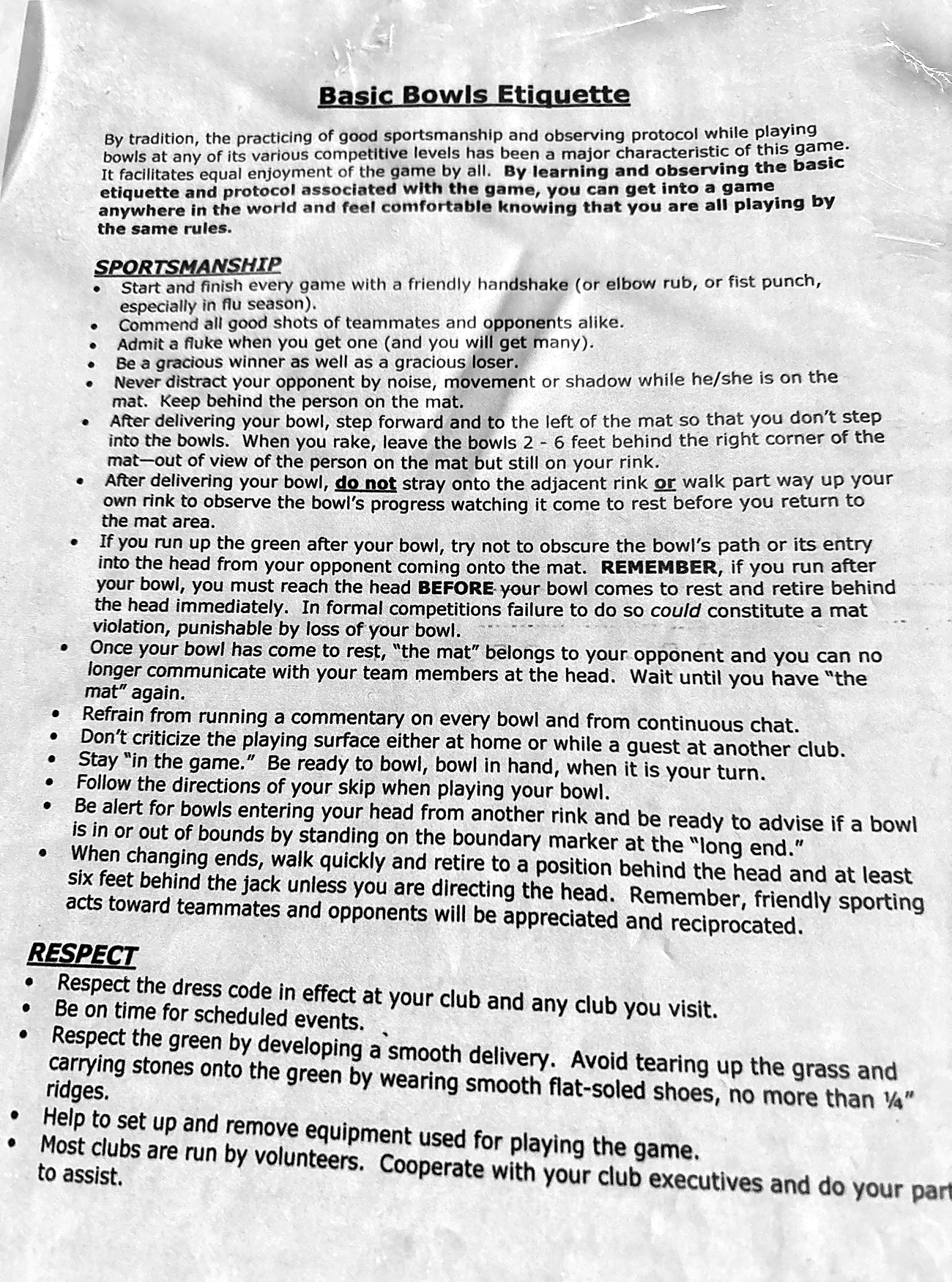
Photo: Tony Newton · original source unknown
Read the text
Basic Bowls Etiquette
By tradition, the practicing of good sportsmanship and observing protocol while playing bowls at any of its various competitive levels has been a major characteristic of this game. It facilitates equal enjoyment of the game by all. By learning and observing the basic etiquette and protocol associated with the game, you can get into a game anywhere in the world and feel comfortable knowing that you are all playing by the same rules.
SPORTSMANSHIP
- Start and finish every game with a friendly handshake (or elbow rub, or fist punch, especially in flu season).
- Commend all good shots of teammates and opponents alike.
- Admit a fluke when you get one (and you will get many).
- Be a gracious winner as well as a gracious loser.
- Never distract your opponent by noise, movement or shadow while he/she is on the mat. Keep behind the person on the mat.
- After delivering your bowl, step forward and to the left of the mat so that you don’t step into the bowls. When you rake, leave the bowls 2 - 6 feet behind the right corner of the mat—out of view of the person on the mat but still on your rink.
- After delivering your bowl, do not stray onto the adjacent rink or walk part way up your own rink to observe the bowl’s progress watching it come to rest before you return to the mat area.
- If you run up the green after your bowl, try not to obscure the bowl’s path or its entry into the head from your opponent coming onto the mat. REMEMBER, if you run after your bowl, you must reach the head BEFORE your bowl comes to rest and retire behind the head immediately. In formal competitions failure to do so could constitute a mat violation, punishable by loss of your bowl.
- Once your bowl has come to rest, “the mat” belongs to your opponent and you can no longer communicate with your team members at the head. Wait until you have “the mat” again.
- Refrain from running a commentary on every bowl and from continuous chat.
- Don’t criticize the playing surface either at home or while a guest at another club.
- Stay “in the game.” Be ready to bowl, bowl in hand, when it is your turn.
- Follow the directions of your skip when playing your bowl.
- Be alert for bowls entering your head from another rink and be ready to advise if a bowl is in or out of bounds by standing on the boundary marker at the “long end.”
- When changing ends, walk quickly and retire to a position behind the head and at least six feet behind the jack unless you are directing the head. Remember, friendly sporting acts toward teammates and opponents will be appreciated and reciprocated.
RESPECT
- Respect the dress code in effect at your club and any club you visit.
- Be on time for scheduled events.
- Respect the green by developing a smooth delivery. Avoid tearing up the grass and carrying stones onto the green by wearing smooth flat-soled shoes, no more than ¼″ ridges.
- Help to set up and remove equipment used for playing the game.
- Most clubs are run by volunteers. Cooperate with your club executives and do your part to assist.
Transcribed from the photo. A few words at the right edge of the last line are partly cut off in the photo (“do your part”).
Team Positions and Specific Duties
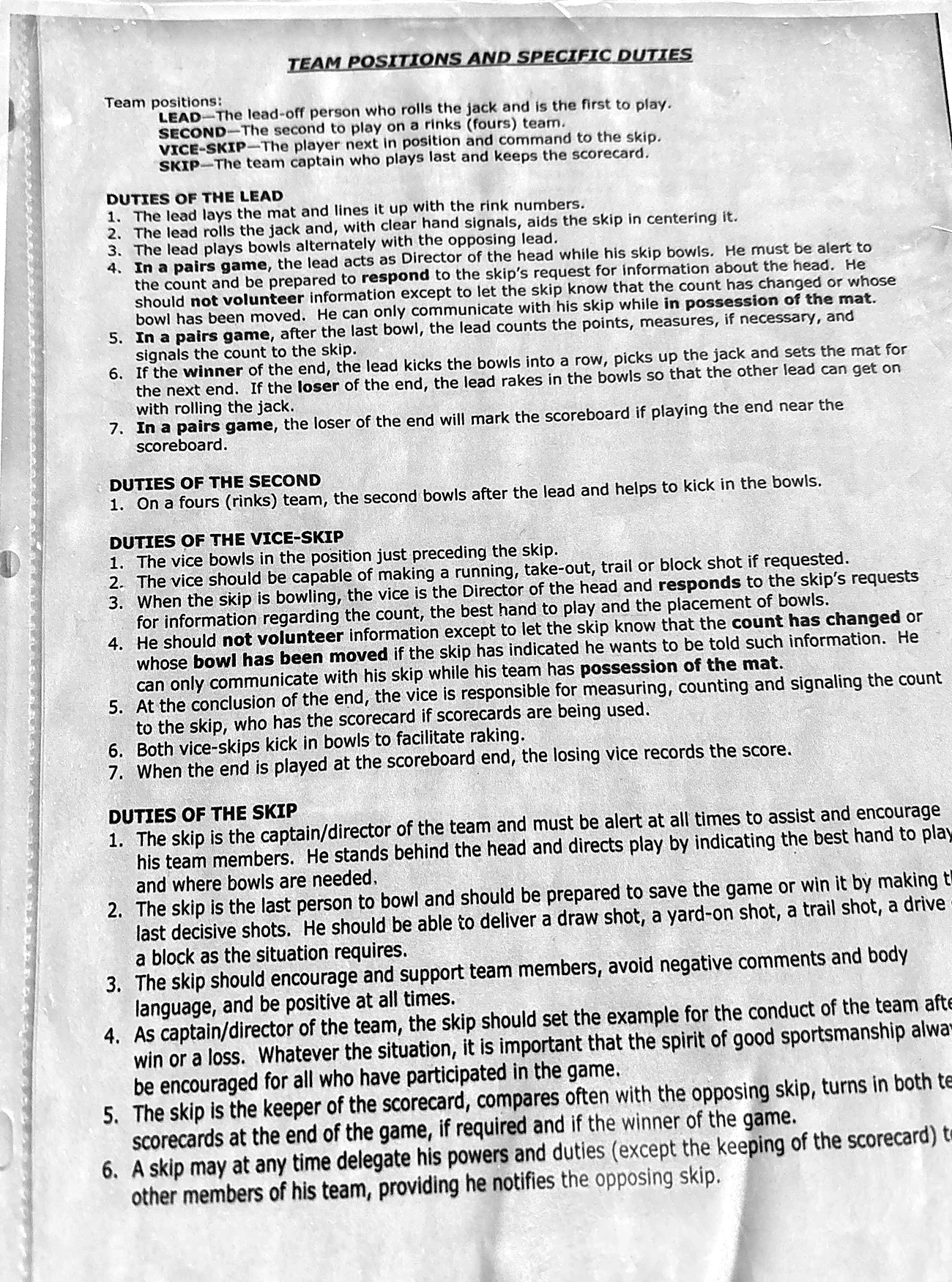
Photo: Tony Newton · original source unknown
Read the text
TEAM POSITIONS AND SPECIFIC DUTIES
Team positions:
LEAD—The lead-off person who rolls the jack and is the first to play.
SECOND—The second to play on a rinks (fours) team.
VICE-SKIP—The player next in position and command to the skip.
SKIP—The team captain who plays last and keeps the scorecard.
DUTIES OF THE LEAD
- The lead lays the mat and lines it up with the rink numbers.
- The lead rolls the jack and, with clear hand signals, aids the skip in centering it.
- The lead plays bowls alternately with the opposing lead.
- In a pairs game, the lead acts as Director of the head while his skip bowls. He must be alert to the count and be prepared to respond to the skip’s request for information about the head. He should not volunteer information except to let the skip know that the count has changed or whose bowl has been moved. He can only communicate with his skip while in possession of the mat.
- In a pairs game, after the last bowl, the lead counts the points, measures, if necessary, and signals the count to the skip.
- If the winner of the end, the lead kicks the bowls into a row, picks up the jack and sets the mat for the next end. If the loser of the end, the lead rakes in the bowls so that the other lead can get on with rolling the jack.
- In a pairs game, the loser of the end will mark the scoreboard if playing the end near the scoreboard.
DUTIES OF THE SECOND
- On a fours (rinks) team, the second bowls after the lead and helps to kick in the bowls.
DUTIES OF THE VICE-SKIP
- The vice bowls in the position just preceding the skip.
- The vice should be capable of making a running, take-out, trail or block shot if requested.
- When the skip is bowling, the vice is the Director of the head and responds to the skip’s requests for information regarding the count, the best hand to play and the placement of bowls.
- He should not volunteer information except to let the skip know that the count has changed or whose bowl has been moved if the skip has indicated he wants to be told such information. He can only communicate with his skip while his team has possession of the mat.
- At the conclusion of the end, the vice is responsible for measuring, counting and signaling the count to the skip, who has the scorecard if scorecards are being used.
- Both vice-skips kick in bowls to facilitate raking.
- When the end is played at the scoreboard end, the losing vice records the score.
DUTIES OF THE SKIP
- The skip is the captain/director of the team and must be alert at all times to assist and encourage his team members. He stands behind the head and directs play by indicating the best hand to play and where bowls are needed.
- The skip is the last person to bowl and should be prepared to save the game or win it by making the last decisive shots. He should be able to deliver a draw shot, a yard-on shot, a trail shot, a drive or a block as the situation requires.
- The skip should encourage and support team members, avoid negative comments and body language, and be positive at all times.
- As captain/director of the team, the skip should set the example for the conduct of the team after a win or a loss. Whatever the situation, it is important that the spirit of good sportsmanship always be encouraged for all who have participated in the game.
- The skip is the keeper of the scorecard, compares often with the opposing skip, turns in both team scorecards at the end of the game, if required and if the winner of the game.
- A skip may at any time delegate his powers and duties (except the keeping of the scorecard) to other members of his team, providing he notifies the opposing skip.
Transcribed from the photo. A few words at the right edge of the Skip section are partly cut off in the photo (e.g. “making the,” “a drive or,” “after,” “always,” “both team,” “to”) and were completed from the visible letters and sentence sense.